New intelligence
for heart failure detection
Advanced AI that flags HFpEF and cardiac amyloidosis from a single echo view.
FDA 510(k) cleared.
Live in top U.S. hospitals.
Incremental reimbursement.
See more in every echo
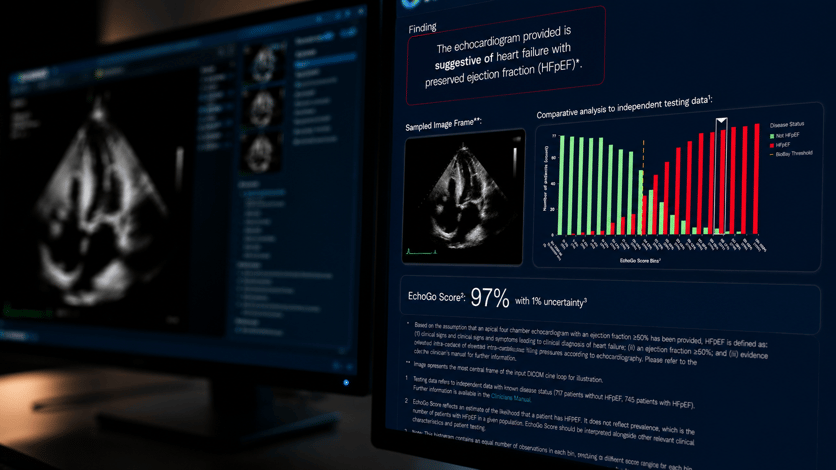
Ultromics provides FDA-cleared, clinically validated AI to help identify patients with HFpEF and cardiac amyloidosis by analyzing routine echocardiograms within existing workflows, supporting the identification of two severely undiagnosed conditions.
One workflow integration. Two AI findings.
Advanced AI that helps clinicians identify patients with HFpEF and screen for cardiac amyloidosis, delivered through a single workflow-integrated platform.

Proven in real-world practice
U.S. hospitals are using Ultromics technology to support heart failure assessment. In clinical practice, physicians have reported that Ultromics has helped identify patients with HFpEF and cardiac amyloidosis, including when findings are subtle or inconclusive.²
A direct reimbursement pathway
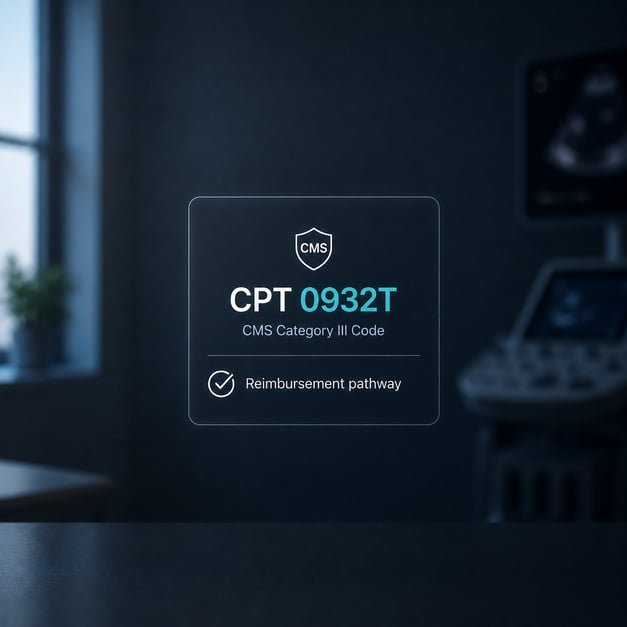
Assigned CPT Category III code 0932T by CMS for EchoGo Heart Failure, helping providers capture reimbursement through AI-assisted evaulation.¹
Built for echo
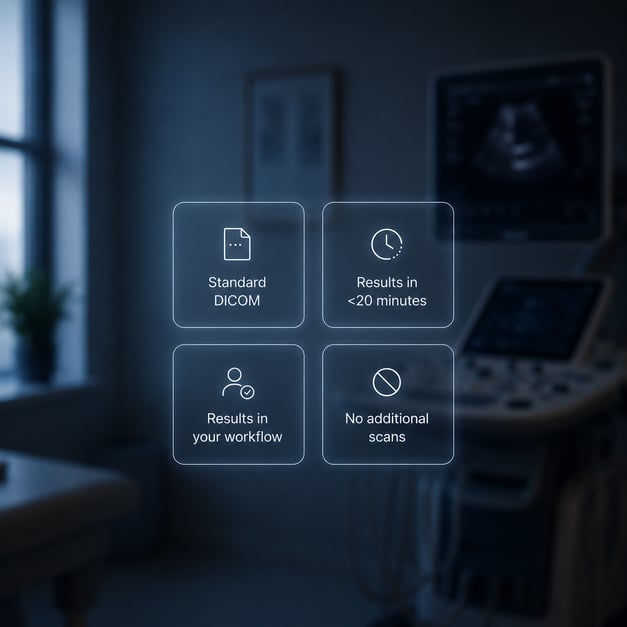
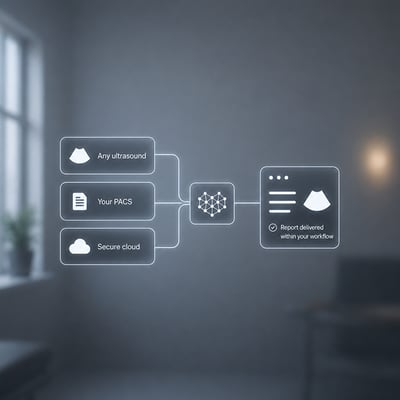
Ultromics AI analyzes standard echo studies after acquisition and returns results into existing clinical systems, integrating with ultrasound and PACS environments without changing how studies are scanned, read, or reported.
Real-world AI, live today in diagnostic workflows.
Customers are using Ultromics' technology in echo workflows today, helping clinical teams flag HFpEF and cardiac amyloidosis to support reporting and assessments.
See where Ultromics' AI supports the clinical care pathway
Explore clinical scenarios where Ultromics' technology helps clinicians recognise HFpEF and cardiac amyloidosis early from routine echocardiograms.
Multiple echocardiograms.
Repeated admissions.
Late diagnosis
A 70-year-old Caucasian male presented with shortness of breath and a new murmur. His history included atrial fibrillation, hypertension, and hyperlipidemia.
Across several years, the patient experienced repeated hospitalizations, worsening symptoms, and multiple inconclusive evaluations. Echo findings showed progressive LVH, bi-atrial enlargement, worsening EF, and aortic stenosis, but the true underlying disease remained unconfirmed.
The diagnostic challenge
The patient’s symptoms and imaging findings were non-specific and evolved over time. Despite multiple echoes, hospitalisations and follow-up visits, the true diagnosis was not achieved until 2025.
Findings were interpreted through several possible clinical pathways, including aortic stenosis and HOCM, but the underlying cardiac amyloidosis remained elusive for at least 4 years.
Patient snapshot
- 70-year-old Caucasian male
- History of atrial fibrillation, hypertension and hyperlipidemia
- Indication: murmur and shortness of breath
Clinical journey
Over the course of hospitalizations and procedures, the patient received echocardiograms in 2020, 2021, 2022, 2023, 2024, and 2025. With the implementation of EchoGo® Amyloidosis, the patient’s echo was flagged as “suggestive of cardiac amyloidosis” in 2025, when his LVEF had deteriorated to ~30-35%
The patient then received a diagnostic work-up including PYP and was confirmed to have ATTR-CM.
Retrospective review of his five previous echo studies show that EchoGo® Amyloidosis would have flagged the underlying cardiac amyloidosis beginning with his echo in 2021, earlier in the disease progression when his LVEF was preserved at ~50-55%.
Key clinical pattern
- 4 hospitalisations
- Multiple follow-up visits
- Inconsistent and variable echo measurements
- Worsening symptoms over time
- Diagnosis delayed until 2025
EchoGo® Amyloidosis result
Suggestive of Cardiac Amyloidosis
EchoGo® Amyloidosis identified findings “suggestive of cardiac amyloidosis,” helping surface a disease signal that had remained hidden across years of clinical evaluation.
What EchoGo® Amyloidosis could have changed
Had EchoGo® Amyloidosis been used earlier in the patient’s echo journey, the finding “suggestive of cardiac amyloidosis” could have helped prompt earlier diagnostic review, specialist follow-up, and confirmatory testing.
Instead of multiple years of worsening symptoms and inconclusive evaluations, EchoGo® Amyloidosis could have provided an additional disease-specific signal to support earlier recognition of an often-missed cause of heart failure and mortality.
Borderline Findings.
Unexplained breathlessness.
A 64-year-old African-American woman presented with progressive shortness of breath and reduced activity tolerance, saying she "can't do as much as I used to."
Her history included atrial fibrillation, hypertension and obesity. Her echocardiogram showed a preserved EF of 50–55%, LV wall thickness of 1.2 cm, mild AS and mild bi-atrial enlargement.
The diagnostic challenge
Standard assessment left uncertainty. Under the 2016 ASE Guidelines for Diastolic Dysfunction, the result was indeterminate. With the 2025 ASE guideline updates, several measurements remained borderline, meaning variability could place the patient in either grade 1 or grade 2 diastolic dysfunction. Atrial fibrillation and obesity made her echo more challenging to interpret.
Patient snapshot
- 64-year-old African-American female
- History of atrial fibrillation, hypertension and obesity
- Indication: shortness of breath
EchoGo® Heart Failure result
Suggestive of HFpEF
EchoGo® Heart Failure identified findings suggestive of HFpEF, helping move the case from uncertainty to a clearer path for clinical follow-up.
EchoGo® Heart Failure provided the care team information so they could move beyond an indeterminate guideline result and consider targeted follow-up sooner.
Instead of leaving unexplained breathlessness in a diagnostic grey zone, EchoGo provided an additional disease-specific signal to support earlier recognition, clearer clinical decision-making and more timely management.
Looked like HCM. Actually Cardiac Amyloidosis.
A 73-year-old man self-referred for specialist assessment after being followed elsewhere for eight years with a presumed diagnosis of hypertrophic cardiomyopathy (HCM).
His imaging findings appeared consistent with HCM, and the diagnosis remained unchanged for years. Further evaluation at Mayo Clinic ultimately revealed hereditary ATTR cardiac amyloidosis, highlighting how amyloidosis can closely mimic other cardiac conditions on echocardiography.
The diagnostic challenge
Cardiac amyloidosis and HCM can share similar imaging features, including increased wall thickness and overlapping echo phenotypes.
In this case, the patient's presentation was managed as HCM for eight years before advanced testing demonstrated the true underlying disease.
Patient snapshot
- 73-year-old male
- Followed elsewhere for 8 years with presumed HCM
- Self-referred for specialist HCM assessment
- Final diagnosis: hereditary ATTR cardiac amyloidosis
Key findings
- Increased wall thickness
- HCM-like echocardiographic phenotype
- Extensive late gadolinium enhancement on CMR
- Positive PYP scan for transthyretin amyloidosis
- RV biopsy showed no myocyte disarray
- TTR confirmed by mass spectrometry
- Genetic testing confirmed hereditary ATTR amyloidosis (Val124-TTR)
EchoGo® Amyloidosis result
Suggestive of Cardiac Amyloidosis
EchoGo® Amyloidosis identified findings suggestive of Cardiac Amyloidosis directly from the echocardiogram, despite the patient's longstanding presumed diagnosis of HCM.
What EchoGo® Amyloidosis could have changed
Had EchoGo® Amyloidosis been used earlier in the patient's clinical journey, the finding suggestive of Cardiac Amyloidosis could have prompted earlier consideration of infiltrative heart disease and additional confirmatory testing.
Rather than remaining on an HCM pathway for years, EchoGo® Amyloidosis could have provided an additional disease-specific signal supporting earlier recognition of hereditary ATTR cardiac amyloidosis and more timely access to appropriate treatment and family screening.
Clinically evaluated performance, supported by published evidence.
Performance has been evaluated in
both peer-reviewed studies
and real-world clinical settings.³⁻⁵
PEER-REVIEWED
JACC Advances + JASE
Clinical Sites
Mayo Clinic
real-world cases
10,000+
PEER-REVIEWED
European Heart Journal
Clinical sites
Chicago Medicine + 18 global sites.
Independent multisite validation.
real-world cases
12,500+
In clinical evaluation under intended-use conditions, EchoGo® Heart Failure demonstrated 90.3% sensitivity and 86.1% specificity, EchoGo® Amyloidosis demonstrated 84.5% sensitivity and 89.7% specificity. See FDA 510(k) K240013 and K240860 for full results.
Featured in respected journals.

Real people. Real results.
Explore real-world evaluations, implementation stories, and clinical impact.
AI Assessment Lab,
powered by Dandelion
The American Heart Association AI Assessment Lab, powered by Dandelion Health, independently evaluated EchoGo® Heart Failure to assess its potential clinical and financial impact.
The report projected that EchoGo Heart Failure could enable 4,173 additional timely HFpEF diagnoses annually in a representative health system. Earlier detection and management was also projected to reduce avoidable hospitalizations, ED visits and readmissions, while creating positive return on investment over five years.
Download report.
City of
Hope
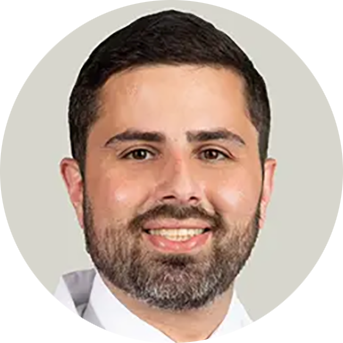
"EchoGo® Heart Failure has given our faculty confidence to take echo findings one step further by drawing a clear conclusion."
Dr. Faizi Jamal of City of Hope discusses how EchoGo® Heart Failure and EchoGo® Amyloidosis have been integrated into clinical practice. The interview explores how AI-driven findings are supporting more actionable echo reports, helping clinicians identify patients who may require further evaluation, and providing additional confidence in disease detection.
University Hospitals
"Knowing that EchoGo® Heart Failure uses only one four-chamber apical view image for the analysis, yet has very good sensitivity and specificity consistent with the published literature, is amazing."
Dr. Andres Schuster shares Cleveland Clinic's experience implementing EchoGo® Heart Failure into routine clinical practice. The interview explores how AI can support earlier HFpEF identification, integrate seamlessly into existing echo workflows, and help clinicians identify patients who may otherwise go undiagnosed.
Working with leading organizations to advance cardiovascular care

American Heart Association
Scientific Sessions 2025: Ultromics CEO and Founder, Ross Upton, was invited to speak at the American Heart Association AI Assessment Lab, sharing perspectives on the implementation of AI technologies in healthcare.

National Institute of Health
Ultromics joined the Accelerating Medicines Partnership® Heart Failure, a 5-year, $37 million collaboration managed by the FNIH to advance HFpEF research and treatment.
Our customers, partners and collaborators

1 / 6
What our clients say:
"That clarity has made our reports far more actionable. Referring physicians now have something concrete to act on. When I say care has improved as a result, that's what I mean, we are providing information that prompts people to intervene."
Faizi Jamal, M.D.
Cardiologist, City of Hope
"Knowing that EchoGo Heart Failure uses only one four-chamber apical view, yet delivers sensitivity and specificity in line with the literature, is impressive."
Dr. Andres Schuster, M.D.
Cardiologist, University Hospitals
"With its ability to provide fully automated detection of cardiac amyloidosis using a single apical 4-chamber view, EchoGo Amyloidosis offers a practical alternative that can be seamlessly integrated into routine workflows without compromising diagnostic performance."
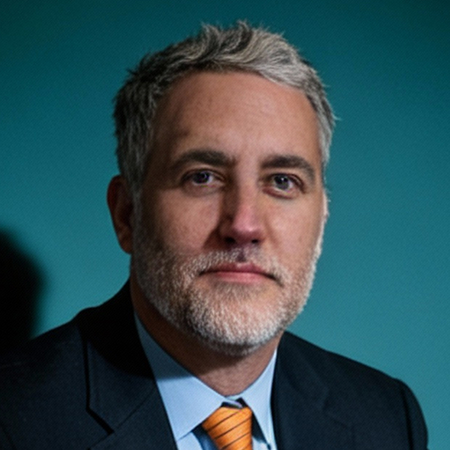
Jeremy Slivnick, M.D.
Cardiologist, UChicago Medicine
"The FNIH will harness valuable perspectives and expertise of a select number of collaborations, including Ultromics, to alleviate this unmet need and pave the way for better classification and more precise treatment strategies."
Julie Gerberding, M.D.
Chief Executive Officer, Foundation for the National Institutes of Health (FNIH)
"The AI model not only accurately identifies patients at increased risk of heart failure hospitalization and cardiac mortality, but also provides valuable prognostic information that could enhance clinical decision making."
Patricia Pellikka, M.D.
Vice Chair, Department of Cardiovascular Medicine, Mayo Clinic
"The promise of precision tools and treatment for heart failure is that we will have the opportunity to diagnose individuals much earlier and intervene, changing the course of this disease."
Gary Gibbons, M.D.
Director, National Heart, Lung, and Blood Institute (NHLBI), National Institutes of Health (NIH)
Integrated into the workflow you already run.
Connects with ultrasound systems and PACS through secure cloud infrastructure, with no disruption to how your team works.
Secure healthcare deployment.
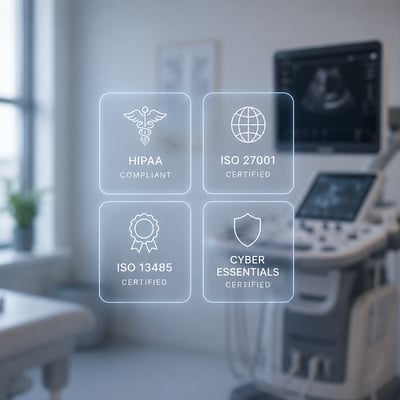
HIPAA compliant, Cyber Essentials certified, ISO 27001 certified, and ISO 13485 certified.
Built to scale across echo labs and health systems.
Cloud-based infrastructure designed to scale across echo labs, hospitals, and health systems, from one site to enterprise-wide adoption.

Automated from analysis to billing.
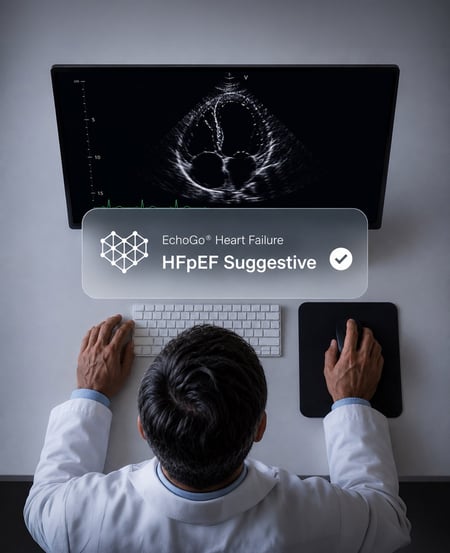
End-to-end automated workflow, from study analysis and report delivery through to automated billing.
Why choose Ultromics?
FDA-cleared technology, peer-reviewed evidence, a direct pathway to reimbursement, seamless workflow integration, and over 10 years of outcomes-linked data to support healthcare organizations adopting advanced AI for HFpEF identification and cardiac amyloidosis screening.
Real-world cases processed
FDA clearances supporting clinical deployment of Ultromics AI solutions.
Outcomes data powering model development and validation.
¹ EchoGo® Reimbursement Guide. CPT® code 0932T assigned for EchoGo® Heart Failure and covered under APC 5743 across applicable outpatient, physician, and office reimbursement pathways.
² Akerman AP et al. JACC Advances. 2023;2:100452. doi:10.1016/j.jacadv.2023.100452.
³ Cassianni C et al. Journal of the American Society of Echocardiography. 2024;37:914-916. doi:10.1016/j.echo.2024.06.016.
⁴ Slivnick JA, Hawkes W et al. European Heart Journal. 2025. doi:10.1093/eurheartj/ehaf387.
⁵ Nagueh SF et al. Journal of the American Society of Echocardiography. 2025;38:537-569.
⁶ American Heart Association AI Assessment Lab analysis.
EchoGo® Heart Failure is FDA 510(k) cleared as a diagnostic aid. EchoGo® Amyloidosis is FDA 510(k) cleared as a screening aid.